Brushstrokes are the Painter’s Fingerprints

Have you seen the Google Art Project? Wow. That is something I could truly get lost in for a couple of hours at a time. The project provides the opportunity to not just look at the most famous works of art, but examine them in a manner of closeness that’s unavailable when standing in front of them in a museum – well without being grabbed by security at least. When you look at a painting you are learning about the subject of the painting and the intent of the artist. When you look closer, down to the texture of the canvas, you learn about the artist himself.

Vincent Van Gogh - "Self Portrait"
Vincent Van Gogh – "Self Portrait"

Just as every human has a unique fingerprint, artists have a unique brush style. The brush strokes tell a story much like a words in a book. Each stroke is a sentence. The strokes are weaved together in a section to form a paragraph. The sections form the entire painting or plot of the story. Each stroke must coordinate with the next one in order to create that visual harmony that so many of the world’s most famous paintings possess. What do these strokes tell us about these artists?

Van Gogh had short and heavy strokes. The marks are laid in with a hurried yet confident approach. There is also a frantic feeling and slightly obsessive approach as the colors ever so slowly change across a plain versus a more standard and sharper delineation to light and shadow. We know that Van Gogh battled with mental problems; we know he bordered on obsessive behavior. Perhaps these brush strokes are not just telling a story of the subject, but are providing a clinical diagnosis to the mental state of the man himself.

John Singer Sargent - "Coventry Patmore"
John Singer Sargent – "Coventry Patmore"

In a quite different example, John Singer Sargent features long flowing brush strokes. The marks appear to be more blended and feature sharper hue variance. Sargent was very comfortable with the dramatic light approach without going the full Rembrandt tilt. His lights are soft and his shadows are deep, but there is always a strong harmony through the painting. In many of his works his brush strokes are almost hidden as he seems to blend away the laborious work he poured into a his painting.

What do my brush marks say about me? I would say they tell of a man who is still discovering his place in the art world. I have experimented with different styles throughout my 9 1/2 year painting career. From the light short strokes of my early paintings, to the heavy opaque marks of just a few years ago; I have tried to change up my brushwork to better understand the medium itself. Oil painting is great for experimenting and learning. One observation about my own work, I have loosened-up in my brush work and I’m less afraid to use brighter colors.
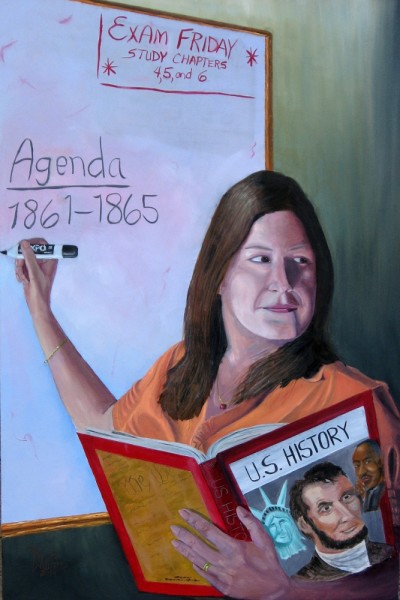
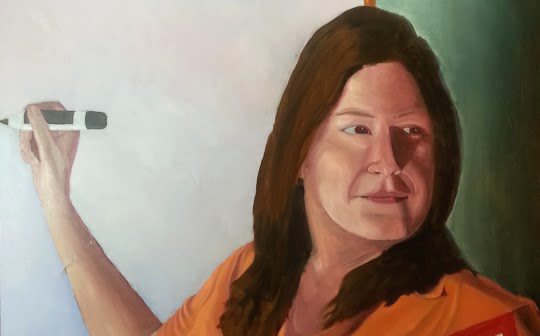
Ryan Williams - "Mrs. Rachel Williams"
Ryan Williams – “Mrs. Rachel Williams”

Which brings me to my final thought – this is the 50th painting that I am about to complete. I thought it might be fun to see where I came from to get where I am now in my painting style. So in the next post and perhaps in a video on my YouTube channel, I will be showing all of my works and we can laugh at how bad I was when I started. Well actually I hope to show you all that with a little dedication and open-mindedness you can improve and reach a level you might not have thought possible. I’m no pro, but I’m certainly closer now that I was in 2005. So when I return I’ll be showing my 50th painting and taking you on a trip down memory lane.

To Put the Soul in Oil Paint

Having completed a portrait and started yet another portrait, I thought I might invite you to hear my thoughts on why I believe a portrait of a person is best handled through the brush instead of a lens. Portraits of people work best when they create an emotional relationship with the viewer. I really don’t think the camera can achieve this relationship.

Photography forever changed our perspective on the human condition. Suddenly we could see where we were, what we were doing, and what we were feeling when we did it. We could celebrate our achievements and regret our mistakes. Photographs have certainly provided modern civilization with a new perspective on life. Say, the photograph was invented just over a century ago; what did people rely on to recall people, places, and events before the camera? Well – enter the painting.

Now of course there were other mediums to experiment and create art with prior to the invention of oil paint, but for the sake of this post we will be focusing on the oil painting. When photography was invented, I’m sure some people were wondering if the painted portrait would fade away, but here we have a case of ‘newer is not necessarily better’. Sure an oil painting can take days to complete while a photograph is near instantaneous, but so what? Does speed always translate into quality? Here is another question: can a photograph capture mood and energy? Well in some circumstances it can if you plan out the shot, including lighting and angle etc. In general, however, you are at the mercy of the instantaneous condition of the shot. The painting, on the contrary, offers control, manipulation at all stages, and provides a greater release of mood and energy.

John Lennon by Derek Russell 2012

Here is something a photograph cannot successfully capture – the heart of the subject as seen through the eyes of the artist. Only a painter can give the viewer a sense of where the subject is in thought. Only a painter can tell you what the mood is through a proper rendering of the eyes. A painting is not a snapshot in time, well it can be I suppose, but in my eyes it’s more of a perpetual loop of emotion. Look into the eyes of the subject and feel their emotions. Place yourself in their shoes and think about their journey to get to this moment in time. Walk away with a new sense of what life offers. Then upon returning to view the painting again, start the process all over again with perhaps a slightly altered conclusion based on previous experiences.

No my friends, a photograph feels too cold and artificial compared to the painting. It feels like a cold hard date in a history book, instead of the essence of the faces in the paint. Truly, painting offers emotional rewards that a photograph could never touch. You see a photograph, but you feel a painting. I’m not trying to bash photography; don’t get me wrong. I love taking pictures and I love the memories that my photos bring to mind, but when it comes to a portrait or a still life; give me a brush.
seascape paintings for sale
teddy bear paintings for sale

Colors Colors Colors

We now interrupt your internet surfing to bring you an educational artistic moment that delves into the theme of color groups. What are color groups? Hey that’s a great question. Now please hold on for a few seconds as we build up the suspense.

Wait for it.

Wait for it.

Okay.

Color groups are…..(drum roll)….. groups of color! BWAH HAHA HA!…..NO WAIT!!! COMEBACK!

Okay I’ll elaborate on that. An effective technique for learning how to see color is to break up a subject by it’s local color groups. Say for example you are painting a still life that features a red hat sitting on a blue sheet with a single light source. What I would do is identify the primary local colors of the entire composition. In this case, we have red and blue. The red hat can then be broken down into dark shades and light tones using the appropriate mixtures of light colors white or yellow, and dark shades like black or green (to neutralize the intensity of the red). Once the shades of red are mixed, I would next move on to the shades of blue for the sheet and so forth. This is really a process to breakdown a complex array of colors into a more manageable system. I guess you could say this is the painter’s version of how to eat an elephant; which is: one bite at a time.

In this portrait there are 5 color groups to work with.

In the current portrait, I have identified seven color groups so far; and boy are my bristles tired (dah-dum chhhhh). This is a lot of preparation of course, but its really necessary. Imagine taking the time to manage the proportions of the face to a point where you were finally ready to paint. Then you lay in the wrong colors and ‘POOF’, you have a flat rendering and poor portrait.

So the lesson for today is preparation. Take the time to mix the colors before you apply them and save yourself perhaps hours of frustration down the line.

We now return you to your “productive” web-surfing.

The Grid: An Artistic Frontier

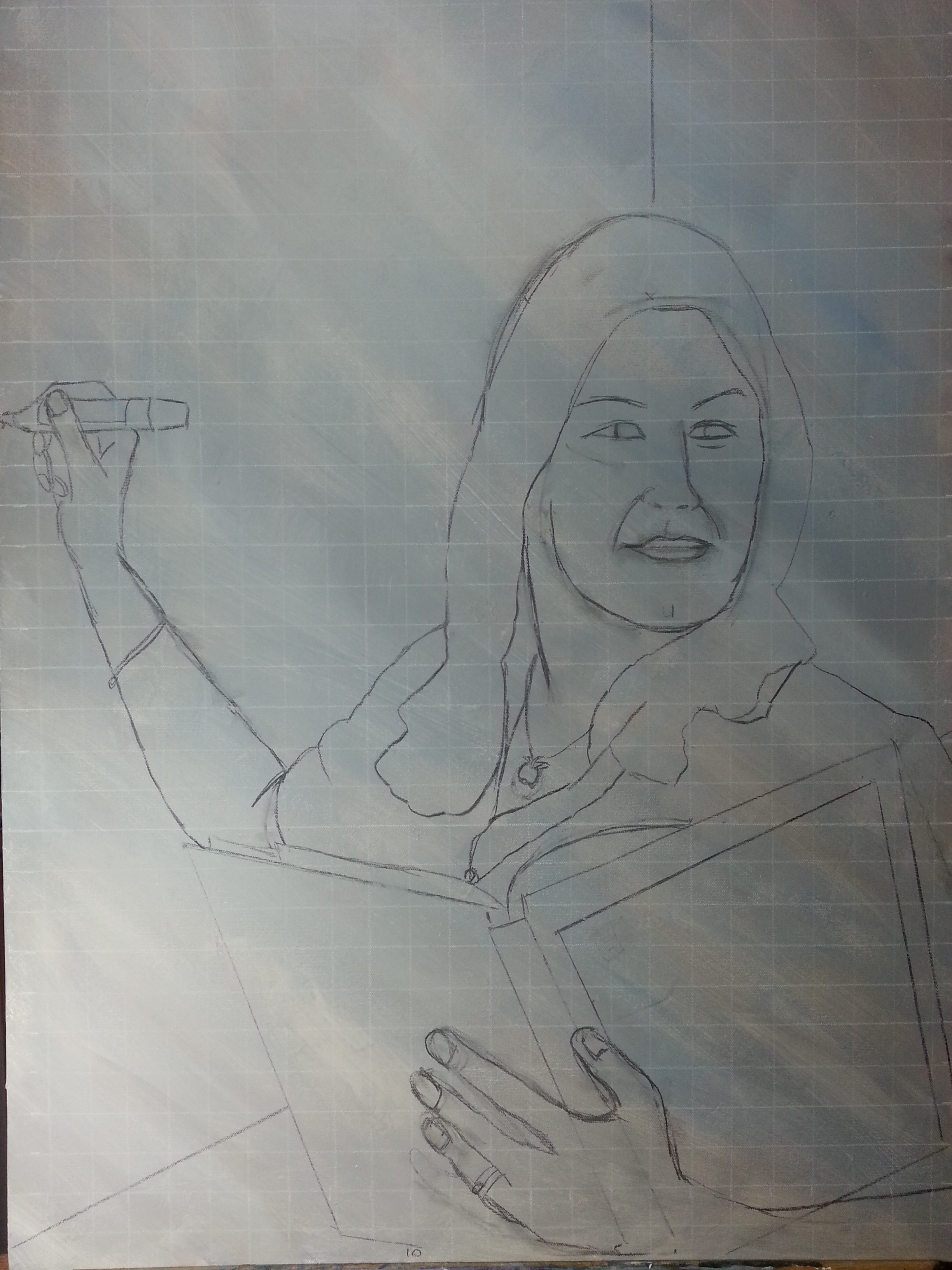
Using the grid system to scale up the photographs, this is the first stages of creating a portrait of my wife.
Here she comes. The rendering has commenced with soft vine charcoal and a series of fine measurements. The result thus far is a crude yet finalized composition of lines, but you can definitely see the likeness coming in. She actually sat for about 20 minutes and posed for me while I shot a video and took still photographs. I couldn’t ask her to sit for hours while I tried to figure out the right color combinations or redraw the sketch for a 10th time. Instead, I ran the video back and took still frames of the positions I liked the most and decided on that for the layout. Since I couldn’t sketch her from life, I had to sketch her from the collections of photographs and still frames. That’s when the first challenge of the project hit me: how to upscale the photographs to the 24”x36” canvas?

The canvas: an artistic frontier. I kept dreaming of a painting I thought I’d never get to see….and then, one day, I got in, er, into drawing a grid that is. Yes the grid system helps a lot when you need to scale a subject up or down by a considerable factor. So this portrait is making use of the grid system. Here is how it works: I start by overlaying a grid of 1”X 1” squares over a photograph of the main subject. The photograph has been scaled to the print size of the painting (in this case it’s 24”x36”). Then I print out the document to fit on a single piece of paper. Next, I measure out the edges of the canvas by 1 inch intervals, mark them, and then draw the grid lines connecting these marks. Now with the grid overlay on the photograph and the grid drawn on the canvas, I can simply follow the contour lines on the paper and transfer that to the canvas. For example, I look at the paper and see that the chin starts at 17” on the X-axis and runs to 24” of the y-axis. So I draw my line to match it on the canvas. Though tedious, this process produces an accurate and properly scaled result with care and patience being required at all times. That is what you are seeing here. This took about 4 hours to prepare the grid and transfer the images. Now my mind is numb with square imagery. I need some curves back in my life.

Up next is finding my color groups. I’ll have more on that in the next update.

The Next Big Thing

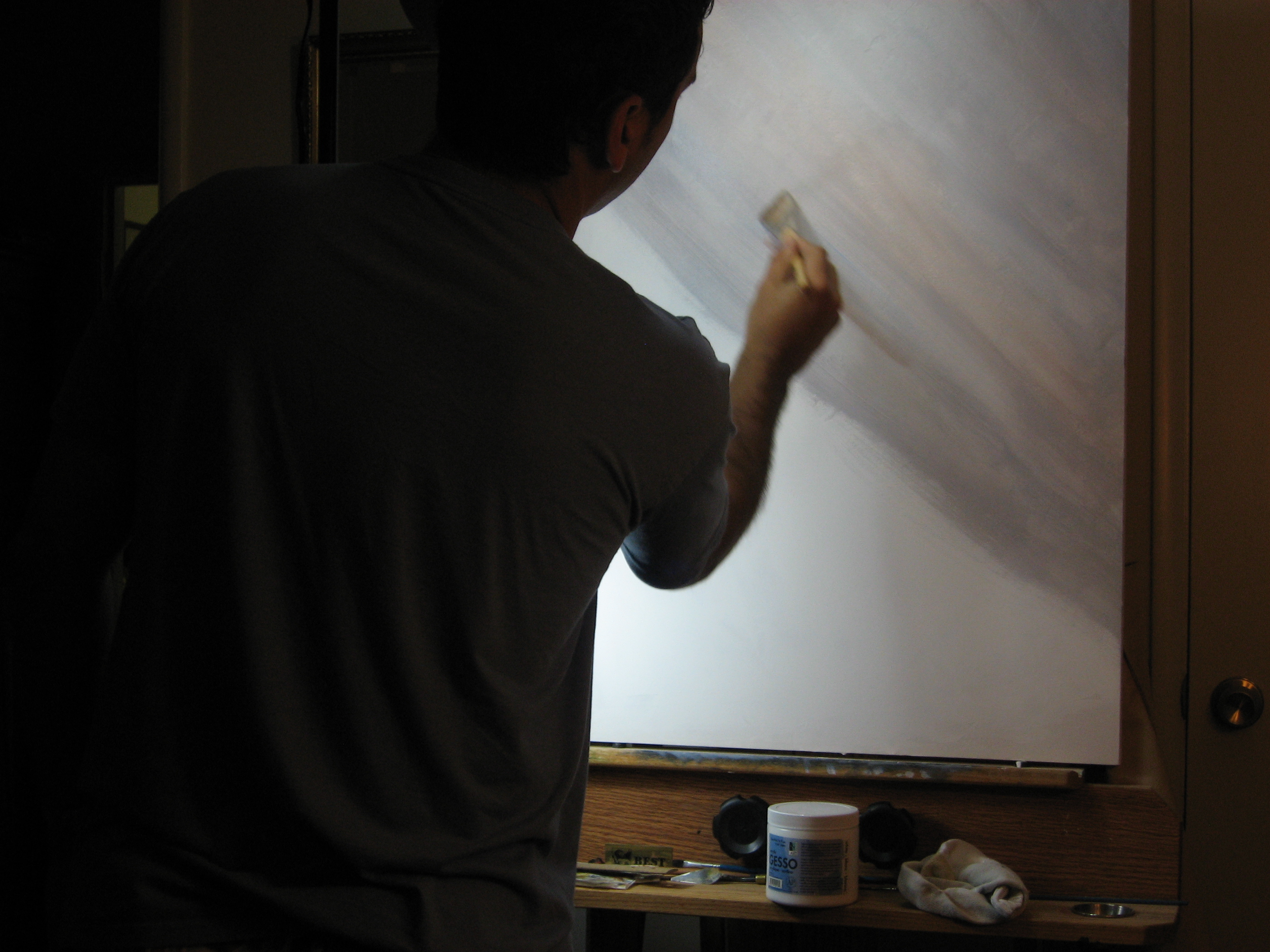
Toning the canvas for a nice equal value. This is my normal setup to a new painting.

Painting? No I haven’t been painting for a month; that doesn’t mean I haven’t been working on something creative. For the last 18 months I have been working intermittently on a mobile game for the Android market. The programming and the artwork are being done by me – actually the entire game is being done by me. I wrote a design document, a script, and have been creating artwork for the game. Now, is the game finished? Not even close. It’s a side hobby of mine so I don’t dedicate every free hour to it. However I do switch between painting and programming and the last 5 weeks have been about programming. The game is now in a stage of foundation. In fact, I have about completed a level framework that should be easy to replicate for all the levels I plan to create in the game. The technical challenges that remain are few. The real work is all of the artwork which remains for me to create. A rough count of the animation cells I have to draw, points to about 100 different drawings. I also have 12 full-scale backgrounds to digitally paint. This sounds like a lot but the characters and scenes are all described and laid out in my design document so there shouldn’t be any mental blocks during the painting process. Actually, I have a real hope to get this game in beta mode sometime this fall. If I can get this out there on the market then I will realize a lifelong dream of mine to release a commercial quality video game. This is all hope and conjecture for now and I’m actually putting down the keyboard for a few weeks to once again to pick up my brush. What will I be doing?

After the technical success of “The Giant Sleeps Tonight,” I was feeling confident in my observation skills. That confidence has stayed with me these four months later and so I’m going to make a renewed effort to step up my portrait skills. The biggest challenge is ahead: a portrait of my wife.

Wow.

Now there is some self-inflicted pressure huh? I mean this has to look good or else this painting will never be hung in my house. She is a wonderful woman with a beautiful face and to do it justice will require a keen eye, steady hand, a little patience, and some courage. I have been creating little sketches of the layout I want and I think I have settled on a layout I like. The plan is to highlight her passion for teaching history. This will be a waist-up, three quarter perspective, natural light portrait. The difference with this painting compared to the other portraits I have done in the past is she will model for me, in the early stages, while I sketch the main features of her face. I will also be recording her position and taking still shots of her for later reference. The objective here is to use my powers of observation to create a fully-realized likeness of her beauty. In my head, the final product is breathtaking. Of course, the final product looks great because of her natural beauty so the only way this comes out wrong is if I’m not looking closely enough. Oh boy, this is going to be a biggie.

We have to challenge ourselves in life. We cannot sit still and let our natural abilities erode into shadows of former glory. I want to become a legitimate portrait artist. To become good at something as challenging as this will require practice and a lot of it. That is why when this portrait is done, I will begin work on another portrait – my second self portrait. I’ll go into more detail on that in a future post.

And then my eyes opened to see….